
Rugged Embedded GPU Computers
Rugged Embedded GPU Computers: Dual Full-Length GPUs, Up to 600 W GPU Budget
Cincoze's current-generation GP-3100 puts two full-length GPU cards — up to 600 W of GPU power at 48 VDC (500 W at 24 VDC) — in a rugged, wall- or rack-mountable chassis with hot-swap storage, ECC DDR5 memory, and MIL-STD-810H shock and vibration compliance.
- Two full-length GPU card slots via the GPU Expansion Box on both GP models
- -40°C to 70°C at 35 W CPU TDP (with wide-temp peripherals; ambient airflow)
- 4× hot-swap 2.5″ SATA bays + M.2 NVMe
- 9–48 VDC input, optional ignition sensing
- EN 50121-3-2 railway EMC (per EN 50155), EN 45545-2, E-Mark
Request a Quote
Tell us your application — a US-based engineer will reply within one business day.
Which GPU Computer Fits Your Workload
The current-generation GP-3100 takes two full-length GPU cards via the GPU Expansion Box; the compact GM-1100 covers workloads where a single MXM module is enough; the previous-generation GP-3000 remains available as a value option.
 MIL-STD-810H
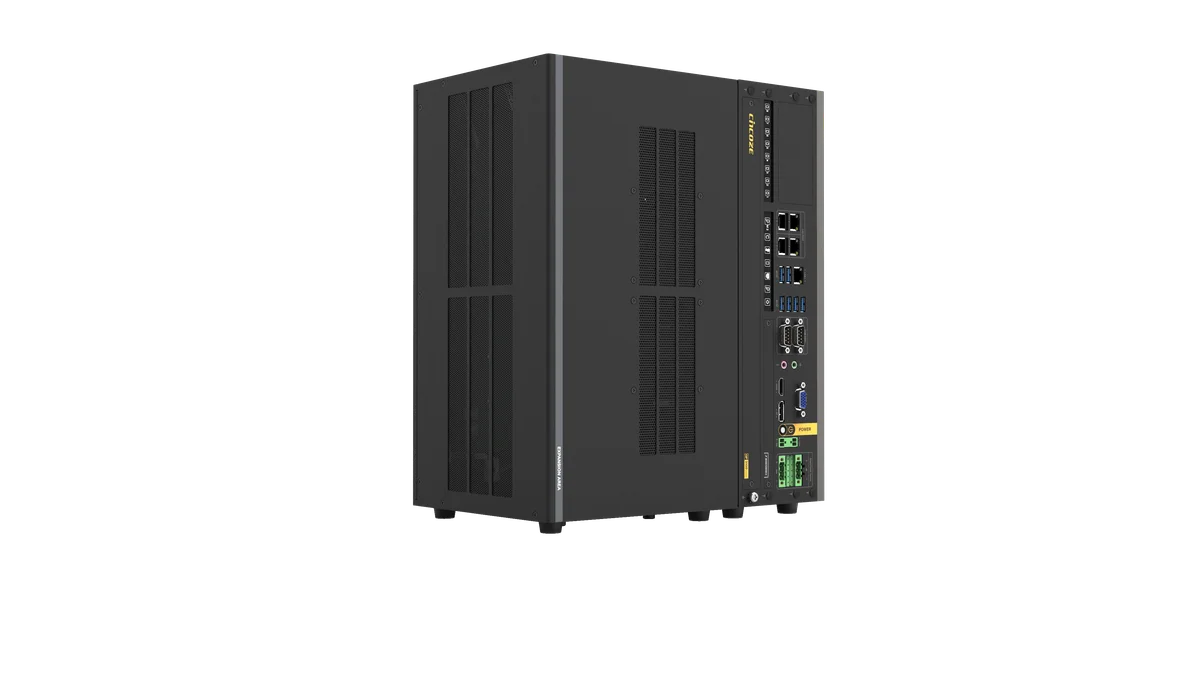
GP-3100 Dual Full-length GPU Expandable Computer
Current-generation flagship — 14th/13th/12th Gen Intel Core with DDR5-5600 ECC memory and 2.5GbE networking for higher camera counts.
- 14th/13th/12th Gen Intel Core (max 65 W)
- 600 W GPU budget @ 48 VDC (500 W @ 24 VDC)
- DDR5-5600 ECC/non-ECC, up to 96 GB
- 4× 2.5GbE + 1× GbE LAN; 4× hot-swap 2.5″ SATA + M.2 NVMe
 MIL-STD-810H
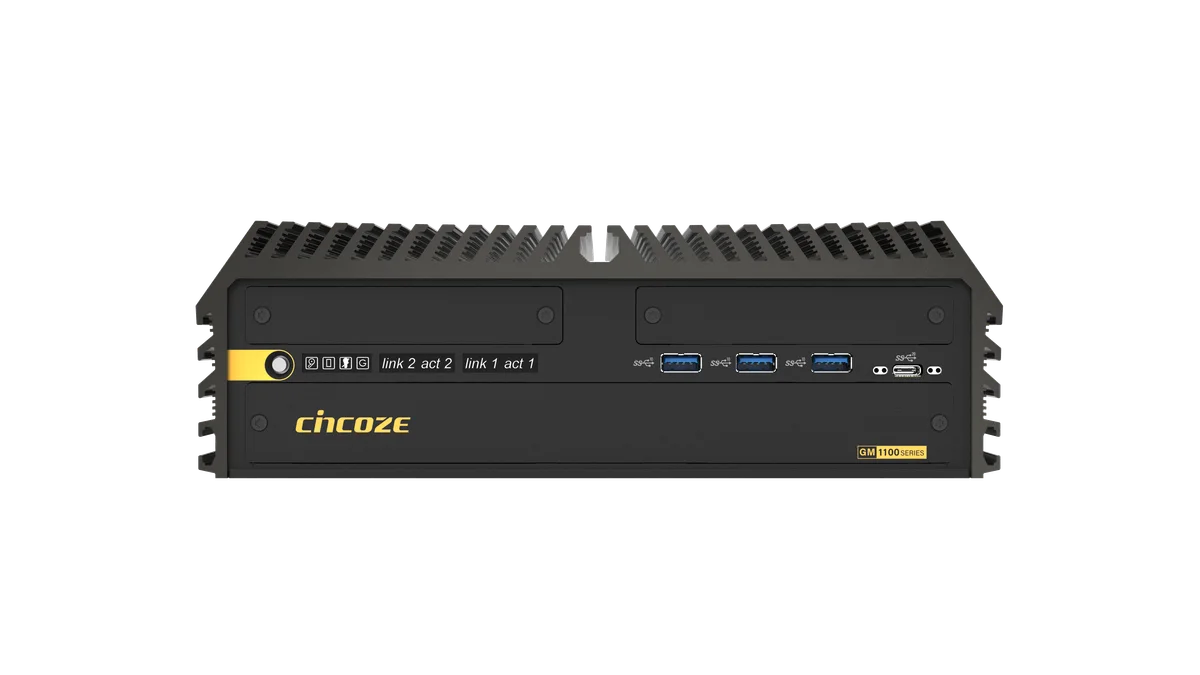
GM-1100 Embedded MXM GPU Computer
Compact MXM GPU computer for single-module inference where dual full-length cards won't fit.
- BTL-S/14th/13th/12th Gen Intel Core (max 65 W)
- 1× MXM 3.1 Type A/B GPU socket (modules up to 80 W)
- DDR5-5600 ECC/non-ECC, up to 96 GB
- 260 × 200 × 85 mm; MXM configs use the FAN-EX102 fan kit
 Previous Generation
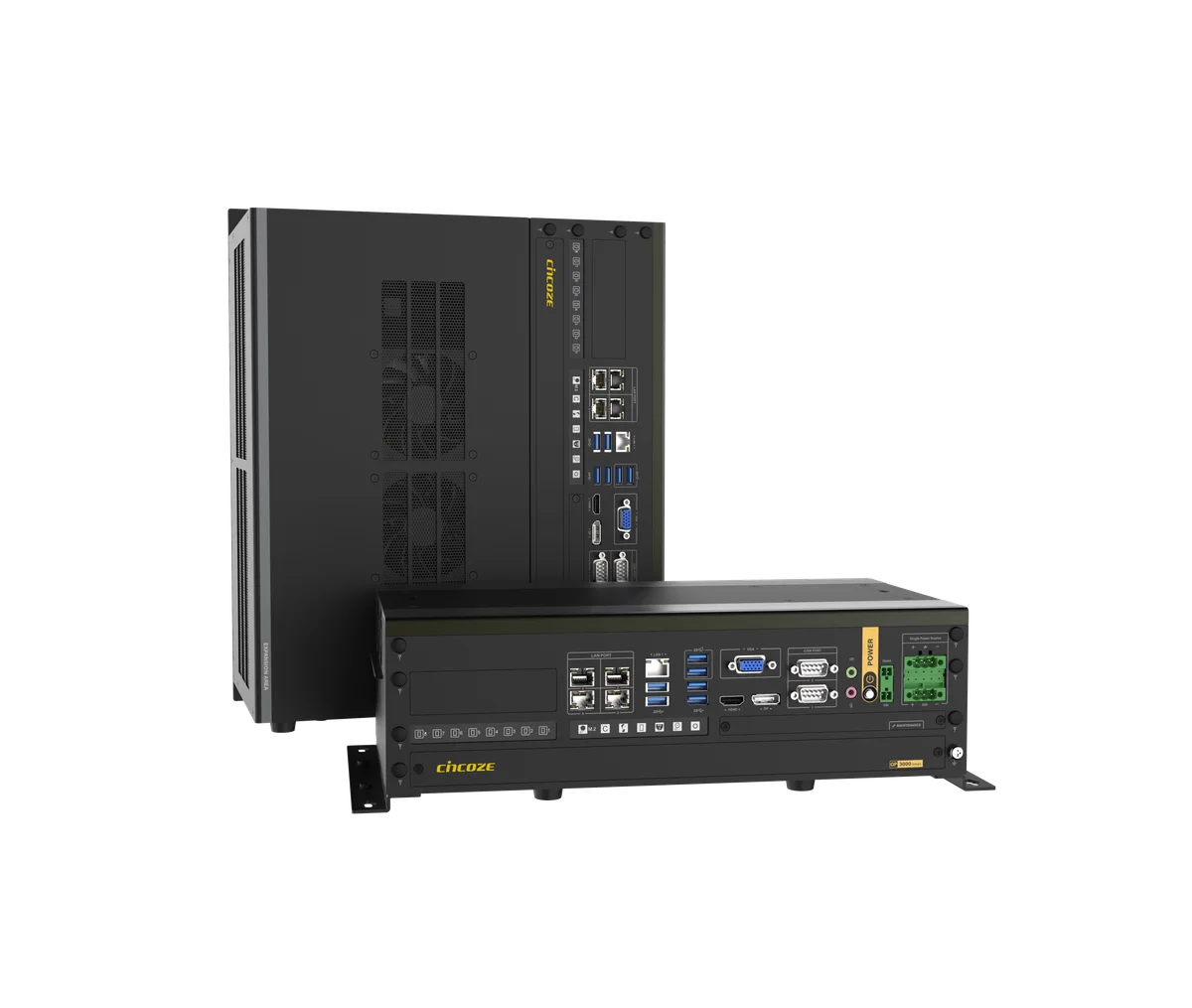
GP-3000 Dual Full-length GPU Expandable Computer
Previous-generation dual-GPU workhorse — Xeon-capable with ECC DDR4 memory, five LAN ports, and MIL-STD-810G compliance.
- 8th/9th Gen Intel Xeon/Core (35–80 W)
- 600 W GPU budget @ 48 VDC (500 W @ 24 VDC)
- DDR4-2666 ECC/non-ECC, up to 64 GB
- 5× GbE LAN, -40°C to 70°C (35 W CPU, no GPU)
Where GP-Series Systems Get Deployed
Machine Vision & Inline Inspection
Run GPU inference against multiple GigE camera streams — the GP-3100 carries four 2.5GbE ports plus one GbE onboard, no add-in NIC required.
Edge AI Inference
Deploy trained models next to the data source, with up to two full-length accelerator cards inside a 600 W (@ 48 VDC) GPU power budget.
Rail & Roadside Video Analytics
EN 50121-3-2 railway EMC (per EN 50155) and EN 45545-2 fire protection across all three models cover rolling stock and wayside cabinets.
Mobile & In-Vehicle AI
9–48 VDC input, E-Mark certification, and optional CFM ignition sensing (12 V/24 V with delay management) suit fleets and mobile platforms.
Inside the GP-Series Platform
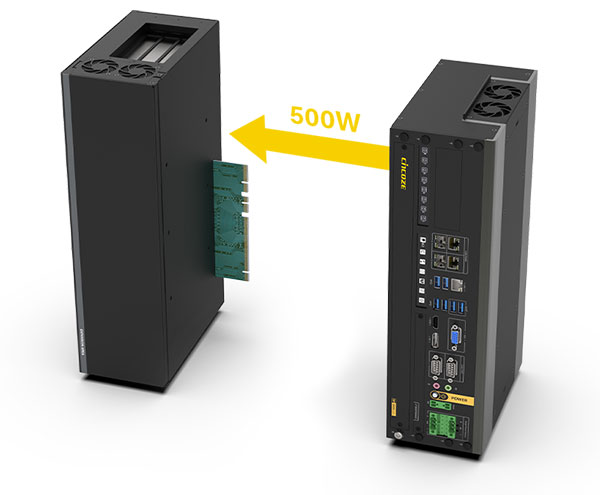
GPU Power: 500 W @ 24 VDC, 600 W @ 48 VDC
Both GP models feed their GPU cards through a defined power envelope: a single GPU runs at 300 W @ 24 VDC; dual-GPU configurations run 500 W @ 24 VDC or 600 W @ 48 VDC (each card up to 300 W). The previous-generation GP-3000 additionally publishes a 720 W total system power budget at 24 VDC with the GEB-3601.
- 9–48 VDC wide-range DC input on both GP models
- Over-voltage (51–58 V), over-current (30 A), and reverse-power protection
- Power ignition sensing via optional CFM module (12 V/24 V, delay management)
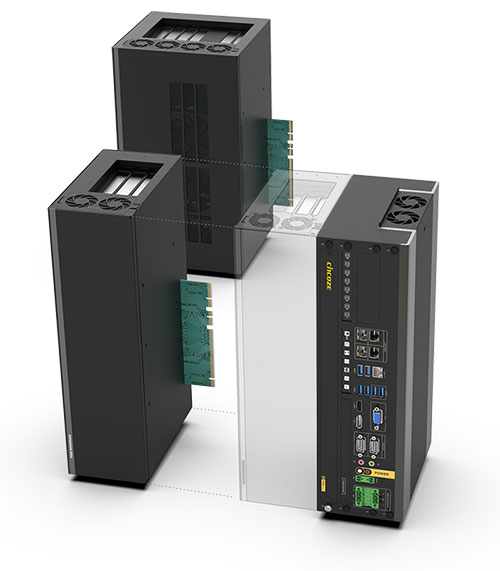
Modular GPU Expansion With GEB
On both GP models the GPU Expansion Box (GEB) determines the card configuration: GEB-3301 provides one PCIe x16 slot plus one PCIe x4 slot; GEB-3601 provides two PCIe x16 slots (x8 signal) plus PCIe x4 and x1 slots. Both accept full-length cards up to 138 × 328 × 64 mm, locked down by a patented adjustable 3D GPU mounting bracket for high-vibration environments.
Beyond graphics, Cincoze CMI and CFM modules add GbE/2.5GbE/10GbE LAN, CAN bus, DIO, serial, PoE, and power ignition sensing without a chassis redesign.
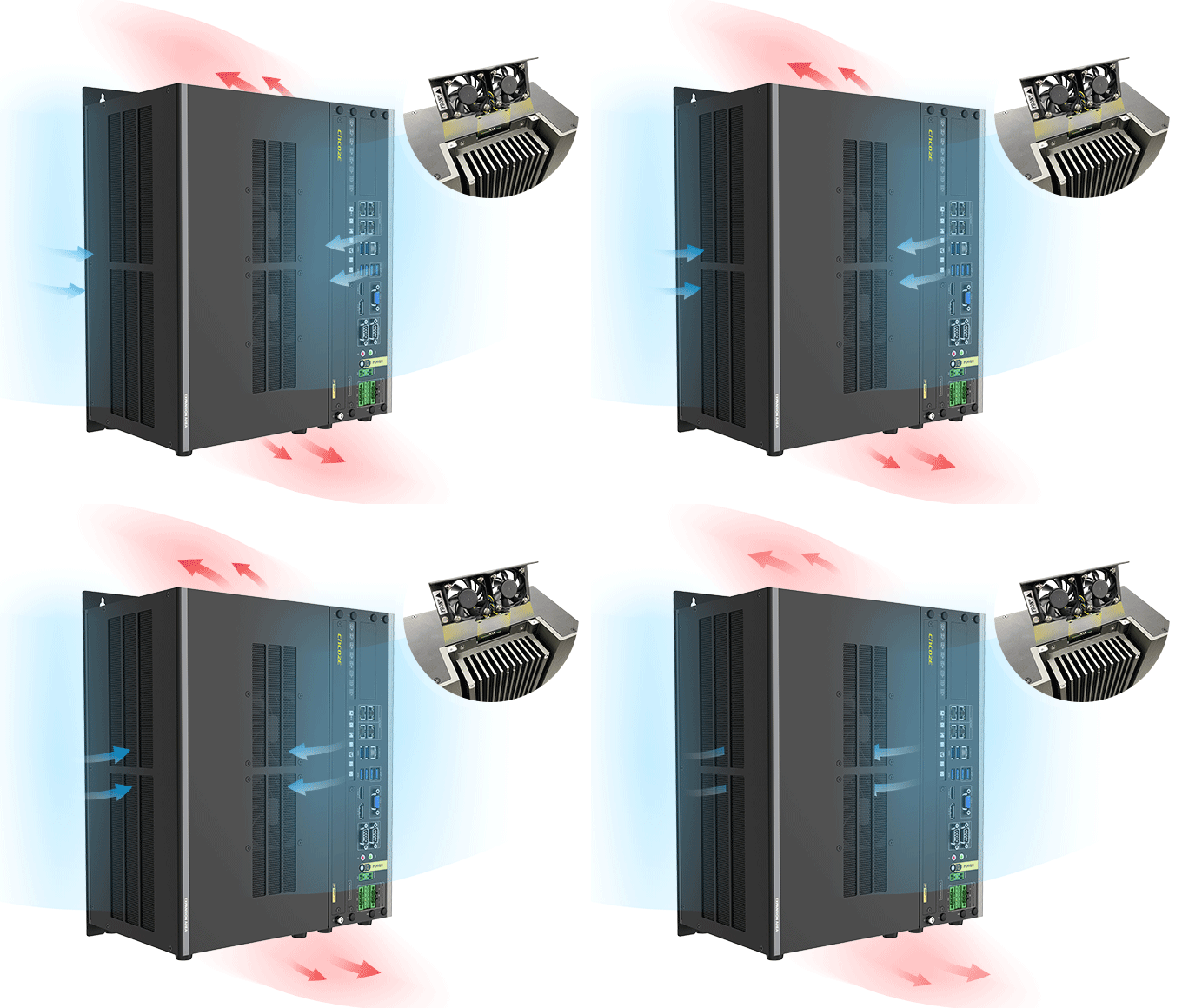
Published Thermal Ratings, Not Marketing Numbers
Cincoze publishes derated operating ranges instead of a single headline number, so you can design the enclosure around real limits:
- GP-3100: -40°C to 70°C with a 35 W CPU; -40°C to 60°C at 45/65 W — GPU heat is handled by isolated external smart fan kits on both sides of the chassis
- GM-1100 with an MXM GPU: up to 50°C ambient (40 W module) or 40°C (60–80 W module), FAN-EX102 external fan kit required
- Previous-gen GP-3000 (35 W CPU): -40°C to 70°C with no add-in GPU; -40°C to 40°C with one 250 W GPU; -40°C to 35°C with two
All ratings assume extended-temperature peripherals and ambient airflow.
Front-Access Serviceability
Drives and SIMs are reachable from the front of the chassis — no unmounting the unit to service it in the field.
- 4× hot-swap 2.5″ SATA bays with RAID 0/1/5/10 on the GP-3100
- M.2 NVMe socket (PCIe Gen 4 x4) for the OS drive
- Front-accessible SIM socket for cellular expansion (2× SIM on the GP-3000)
- Software-programmable watchdog with 256-level system reset
- Tower, desktop, 19″ rack, flat, and wall mounting
GP-3100 vs GM-1100 vs GP-3000
| Spec | GP-3100 (current) | GM-1100 (current) | GP-3000 (previous gen) |
|---|---|---|---|
| Processor | 14th/13th/12th Gen Intel Core, max 65 W | BTL-S/14th/13th/12th Gen Intel Core, max 65 W | 8th/9th Gen Intel Xeon/Core, 35–80 W |
| GPU support | 2× full-length via GPU Expansion Box (GEB) | 1× MXM 3.1 Type A/B module | 2× full-length via GPU Expansion Box (GEB) |
| GPU power budget | 600 W @ 48 VDC (500 W @ 24 VDC) | MXM modules up to 80 W | 600 W @ 48 VDC (500 W @ 24 VDC) |
| Memory | DDR5-5600 ECC/non-ECC, up to 96 GB | DDR5-5600 ECC/non-ECC, up to 96 GB | DDR4-2666 ECC/non-ECC, up to 64 GB |
| LAN | 4× 2.5GbE + 1× GbE | 1× 2.5GbE + 1× GbE | 5× GbE |
| Storage bays | 4× hot-swap 2.5″ + M.2 NVMe | 2× hot-swap 2.5″ + M.2 NVMe | 4× hot-swap 2.5″ + M.2 NVMe |
| Operating temp (35 W CPU, no GPU; wide-temp peripherals, ambient airflow) | -40°C to 70°C | -40°C to 70°C | -40°C to 70°C |
| Shock & vibration | MIL-STD-810H | MIL-STD-810H | MIL-STD-810G |
| Rail & vehicle certs | EN 50121-3-2 railway EMC (per EN 50155), EN 45545-2, E-Mark | EN 50121-3-2 railway EMC (per EN 50155), EN 45545-2, E-Mark | EN 50121-3-2 railway EMC (per EN 50155), EN 45545-2, E-Mark |
GP-Series Buying Questions
What is the difference between the Cincoze GP-3000 and GP-3100?
Can the GP-Series really run two full-length GPU cards?
What happens to the temperature rating when I install GPUs?
What if I don't need full-length graphics cards?
Can these systems run from vehicle or battery power?
Can ADEK configure a GP-Series system for my application?
Spec Your Rugged GPU Computer With an Engineer
Tell us your GPU cards, ambient temperature, and I/O — a US-based engineer will reply within one business day. 30+ years in industrial computing.